Ground-Mounted Solar Arrays for Aberdeenshire Land & Farms
For properties with land to spare but a roof that's shaded, poorly oriented or too small to carry a worthwhile system.
When Ground-Mounted Suits a Property Better Than the Roof
Not every property with solar potential has a roof that can take it. Heavy shading from trees, a roof facing the wrong way, a roof that's too small, or already near the end of its life, can rule out a roof-mount without ruling out solar altogether — if there's a field, paddock or bit of rough ground nearby. East or west-facing roofs still generate reasonably well, but a badly shaded or north-facing roof usually doesn't, and that's where ground-mounted comes in. Smallholdings and rural properties across Aberdeenshire are often better candidates for a ground array than the house itself, and the survey starts by walking the land rather than getting on a ladder. As a rough guide, a modest household-scale array fits comfortably on a paddock corner a fraction of an acre in size, with larger farm-scale systems needing proportionately more space.
Frame and Foundation Options
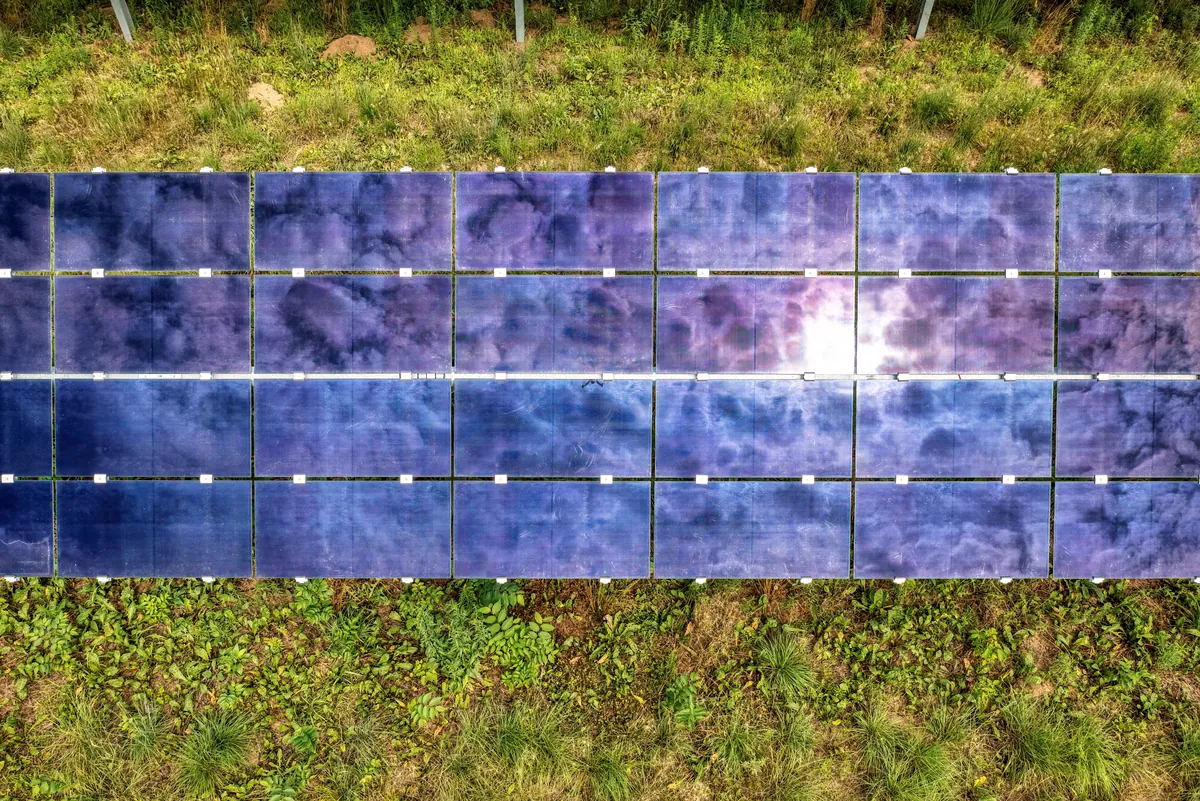
Ground-mounted arrays sit on a galvanised steel frame set at a fixed tilt angle, usually angled south for the best year-round output. Foundation choice depends on your ground: driven steel piles work well on most firm ground and avoid concrete altogether, while concrete pad or screw foundations suit softer or wetter sites, which matters on a fair amount of Aberdeenshire clay and low-lying paddock ground. Panels sit higher off the ground than most people expect, enough for grass cutting or light grazing underneath depending on the frame height chosen. We also plan access between rows for a mower or trailer, since maintenance shouldn't mean squeezing between panels.
- Ground conditions and drainage checked before foundation choice
- Frame height set to suit grazing, mowing or clearance needs
- South-facing tilt for the best year-round output
Fencing, Security and Access
Because a ground-mounted array sits away from the house, security is worth thinking about differently than a roof system. Stock fencing or a dedicated perimeter fence keeps livestock and passers-by away from the cabling and frame, and we advise on a layout that works with existing field boundaries rather than against them. The cable run back to the property needs a planned route, usually buried in a duct, which we cost into the quote from the start rather than as an afterthought — the further the array sits from your existing supply, the more that run adds to the job. This complements our standard solar panel installation service and often gets paired with battery storage given the longer cable run involved.
Frequently Asked Questions
How much land do I need for a ground-mounted array?
It depends on the size of system you need, but as a guide a modest household-scale array needs a paddock-sized plot with reasonable sun through the day, clear of overhanging trees.
Do ground-mounted arrays need planning permission?
Often yes, unlike most roof-mounted domestic systems, particularly above a certain size or in a conservation area. We check this during your survey and handle the application if one's needed.
Can I still use the land underneath or around the array?
Usually. Frame height can be set to allow grass cutting or light grazing underneath, and we'll factor that into the layout if it matters to you.
Ready to Get Started?
Book a free, no-obligation survey and quote for your land or smallholding.